
Postpartum4 min
Baby Blues vs Postpartum Depression: Know the Difference
Mood changes after birth are common, but knowing when they cross into PPD can be life-changing.
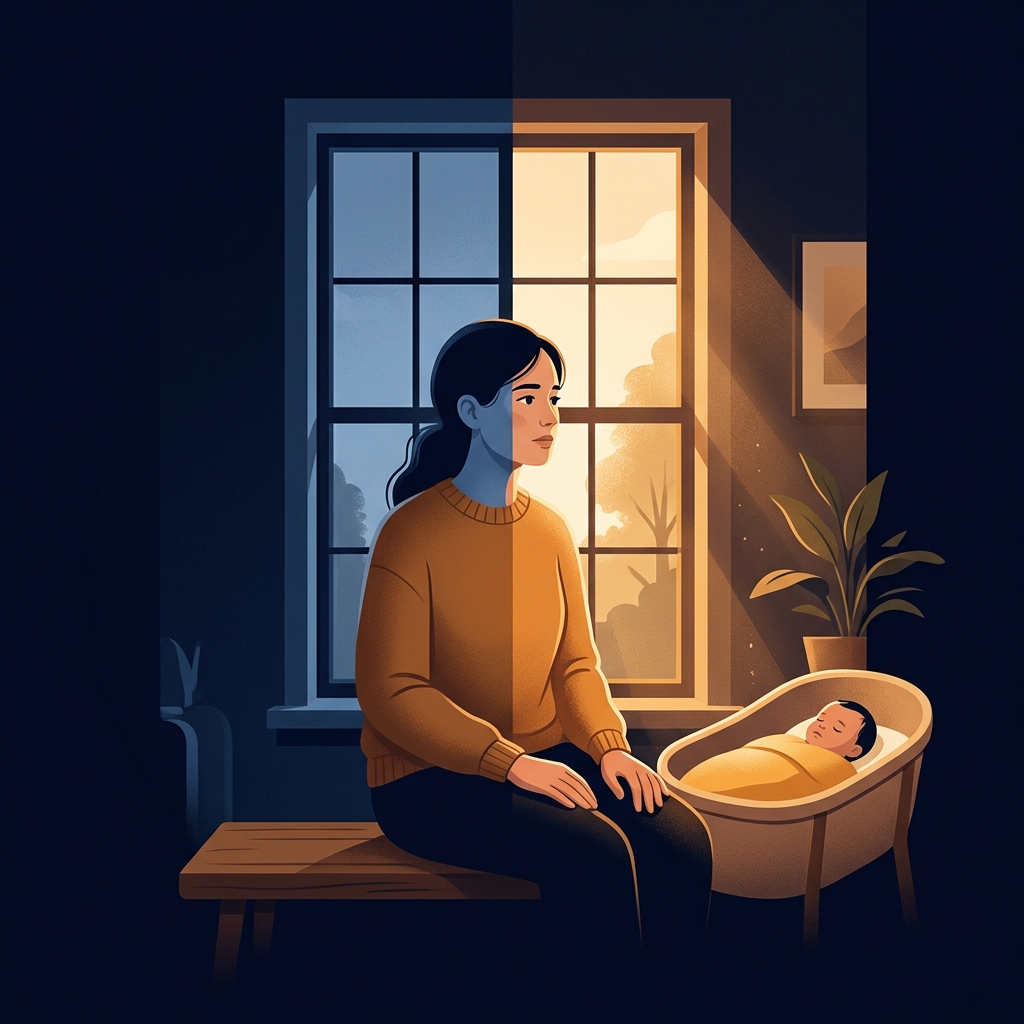
Up to 80% of new mothers experience the "baby blues" — but about 1 in 7 develop postpartum depression, which requires professional support.
Baby Blues
- Begins within 2–3 days of delivery
- Mood swings, tearfulness, irritability
- Resolves on its own within 2 weeks
- Does not significantly impair daily functioning
Postpartum Depression
- Can develop anytime in the first year
- Persistent sadness, hopelessness, or emptiness
- Difficulty bonding with baby
- Changes in appetite and sleep beyond what is normal with a newborn
- Thoughts of self-harm or harming the baby
- Lasts longer than 2 weeks
What to Do
If symptoms persist beyond two weeks or interfere with caring for yourself or your baby, reach out to your healthcare provider immediately. PPD is treatable with therapy, medication, or both.
There is no shame in asking for help. PPD is a medical condition, not a character flaw.
Disclaimer: This content is for informational purposes only and does not constitute medical advice. Always consult a qualified healthcare provider for personalized guidance.