
When Can You See a Baby's Face on Ultrasound? A Stage-by-Stage Guide
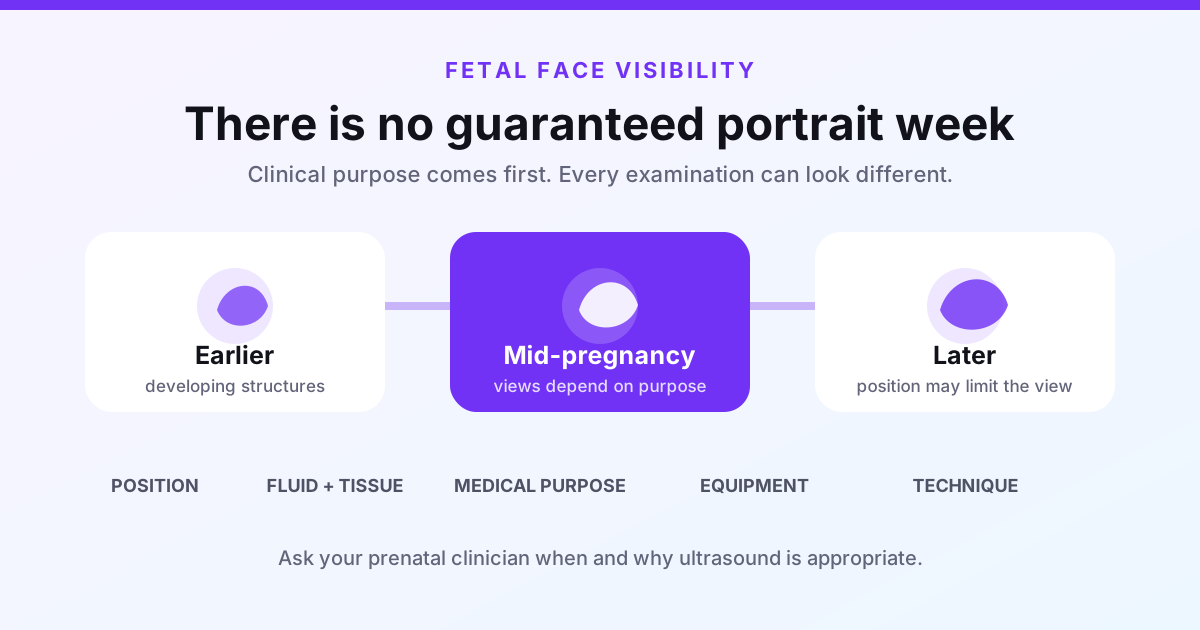
TL;DR — The visibility of a fetal face varies throughout pregnancy and from one examination to another. There is no week that guarantees a recognizable portrait. Professional bodies recommend fetal ultrasound for a medical reason and by appropriately trained professionals; a clinical ultrasound schedule is not a guaranteed portrait timetable.
Medical guidance checked September 8, 2026 against official FDA, AIUM, and RadiologyInfo pages. Guidance and page contents may change; ask your prenatal clinician about your care.
Earlier pregnancy
Clinical ultrasound may show developing structures and a profile at different stages, depending on the medical purpose and view obtained. The face is still developing, and interpretation belongs to the qualified clinician responsible for the examination.
Mid-pregnancy
Different facial views may be obtained during a medically indicated examination, but position, movement, nearby tissue, fluid, equipment, and technique affect the image. A 2D clinical view, 3D surface rendering, and real-time 4D view are different representations.
Later pregnancy
Some studios recommend a range for facial keepsake images, while later size and position can make a clear view more difficult. The recommendation is not a guarantee and should not replace clinically scheduled imaging.
Why the view changes
Fetal position, movement, nearby tissue, amniotic fluid, gestational stage, equipment, operator technique, and the medical purpose of the examination can all change what is visible. More advanced rendering cannot create an unobstructed clinical view when the source view is limited.
If you hope to receive a keepsake image
The FDA says keepsake images are reasonable when they are captured during a medically indicated examination without additional exposure, and it discourages ultrasound exposure performed solely to create keepsake images or videos. The AIUM likewise strongly discourages nonmedical use and recommends minimal exposure by trained, credentialed professionals.
Ask your prenatal clinician when and why ultrasound is appropriate. If an image is available from a medically indicated examination, ask how it will be delivered and retained. If a service offers scan enhancement, AI newborn prediction, or generated motion, ask which output you are receiving and how generated details are disclosed.