
USB, Email, or Cloud? A Safer Ultrasound File-Delivery Checklist
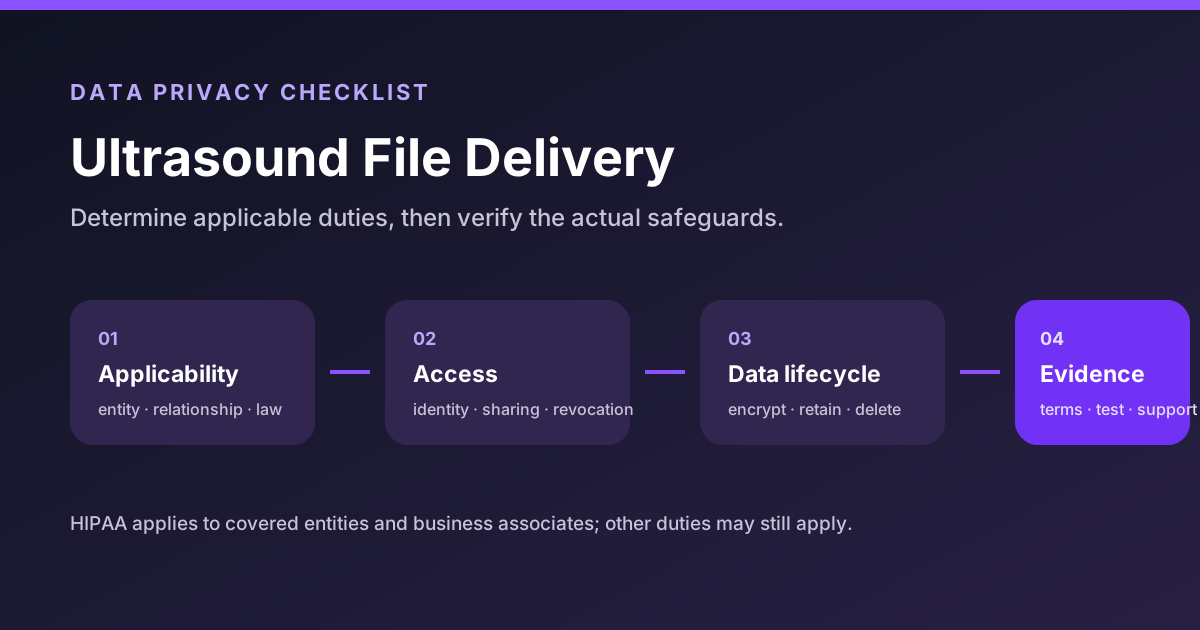
TL;DR — USB drives, personal email, shared cloud folders, and purpose-built delivery platforms create different operational and privacy risks. Choose only after confirming who can access files, how long they remain available, how deletion works, and which laws and contracts apply to your business.
Start with the workflow, not a compliance label
Map where each file is created, copied, stored, shared, and deleted. A USB can be misplaced; an email can go to the wrong address; a public or reusable link can be forwarded; and any cloud service can be misconfigured. A product label alone does not resolve those risks.
HIPAA does not automatically apply to every elective ultrasound studio or every pregnancy-related image. According to HHS guidance, the federal HIPAA rules apply to covered entities and their business associates. A studio should determine its own status and relationships with qualified counsel; other privacy, consumer, breach-notification, and contract duties may still apply.
Ask the same questions for every delivery option
- How is the intended client identified before files are released?
- Is data encrypted in transit and at rest, and what written evidence supports that answer?
- Can access be revoked, and are links protected by sign-in, passcode, or another control?
- What are the retention, deletion, backup, and export terms?
- Which vendors or subprocessors can access the files?
- What happens after a wrong-recipient send, lost device, outage, or failed upload?
- If HIPAA applies, will the vendor sign the required agreement and support your safeguards?
Test the complete handoff
Run a demonstration with non-production sample files. Confirm capture, client matching, delivery, failed-network behavior, support, export, and deletion before using real client data. Keep the written answers with your vendor and privacy records.
Use the ultrasound image-sharing software buyer's guide to compare delivery models. This article is general operational information, not legal advice.