
Planning a Bomee Core Go-Live: Dependencies and Verification
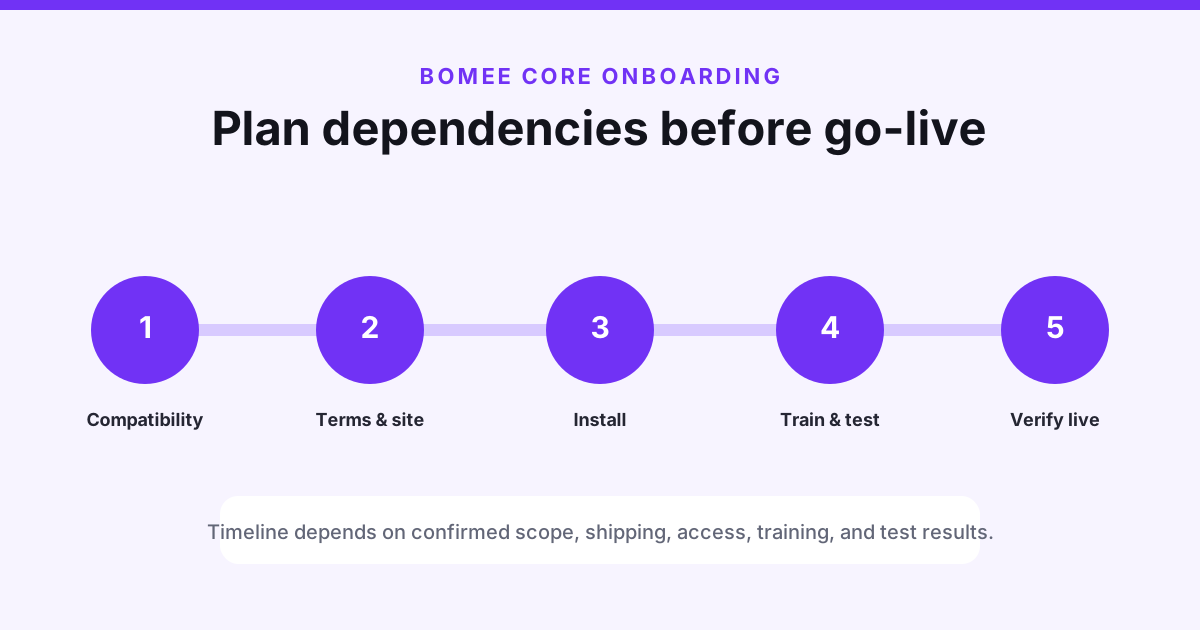
TL;DR — A go-live date depends on confirmed machine compatibility, executed terms, hardware availability and shipping, network and room access, installation, staff training, a successful test delivery, and support readiness. Treat any target date as a plan, not a guarantee of launch or revenue.
1. Confirm scope and compatibility
Document the ultrasound model, available outputs, network constraints, capture requirement, client-matching workflow, intended files, and responsible people. Ask Bomee to confirm the current product and installation path in writing.
2. Complete commercial and privacy review
Review the current agreement, fees, renewal and termination terms, responsibilities, privacy and security materials, support coverage, and any required data-processing terms before scheduling installation.
3. Prepare the site and team
Confirm delivery and installation access, power, network, room layout, user accounts, staff availability, client consent language, and a rollback or manual-delivery path.
4. Test before calling it live
Use non-production sample data to test capture, barcode or client matching, upload, client access, failed-network behavior, support escalation, export, and deletion. Go live only after the owner accepts the evidence and open defects have an agreed disposition.
5. Measure the launch separately from revenue
A successful technical launch does not prove client adoption or profit. Track eligible appointments, offers, opt-ins, fulfilled deliveries, refunds, support time, collected revenue, and contribution margin after launch.