
Back to Insights
Ultrasound Tech
3D vs. 4D vs. 5D vs. 8K: What Do These Ultrasound Terms Mean?
Oct 2025 2 min readBy Bomee Editorial Team
You're searching for a studio, and suddenly you're scrolling through a list of options: 3D, 4D, 5D, HD, even "8K."
It sounds more like you're buying a new TV than booking an ultrasound. What's the real difference?
Let's break it down simply.
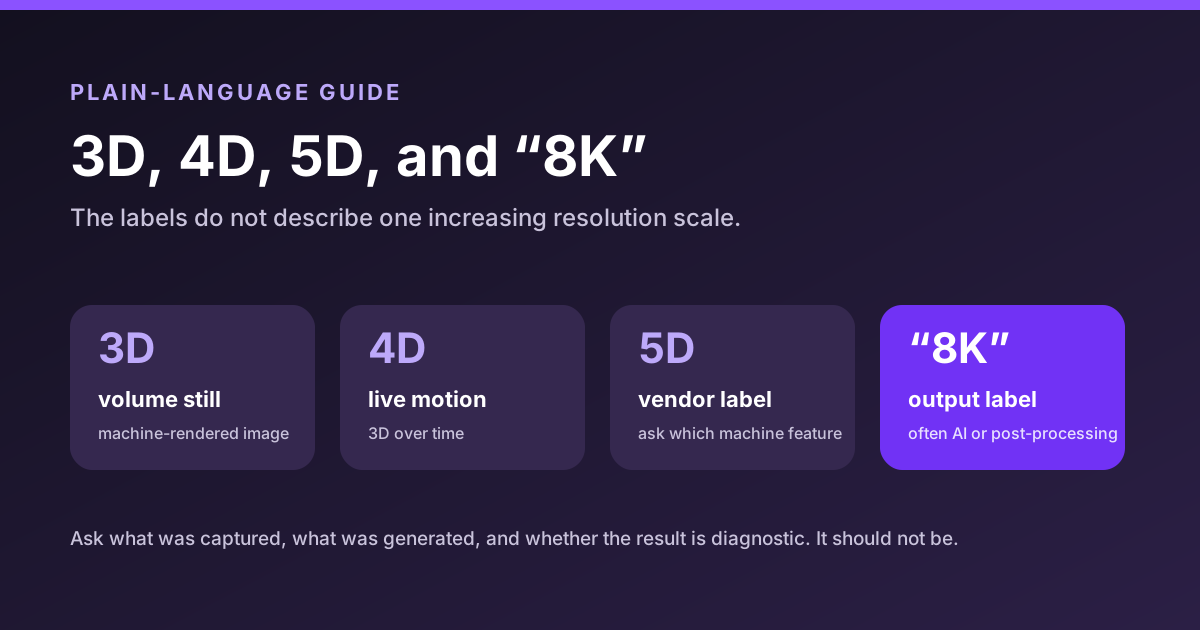
- 3D Ultrasound: Think of this as a still photograph. The machine scans from different angles to build one single, three-dimensional image. This is perfect for those frame-worthy pictures of your baby's face.
- 4D Ultrasound: This is a movie. The "4th dimension" is Time. You are seeing your baby's 3D image in real-time, live motion. This is how you catch them yawning, sucking their thumb, or waving 'hello.'
- 5D / HD: These are manufacturer or provider labels rather than a single technical standard. They commonly describe rendering, lighting, or display features built into an ultrasound system. Ask which machine and feature the studio means.
- "8K ultrasound": This is generally a marketing label for an AI-generated or post-processed keepsake, not proof that the ultrasound machine captured an 8K-resolution scan. The result may add, alter, or infer details and is not diagnostic.
The useful question is not which number sounds highest. Ask whether you are buying a machine-rendered still, live motion captured during the scan, or a later AI-generated keepsake—and how the provider explains the limits of each.
Ready to capture your own magic moment?
For current digital keepsake delivery options, compare Bomee Core and Bomee Air using the capture workflow your studio actually supports.
Tags:Ultrasound Tech