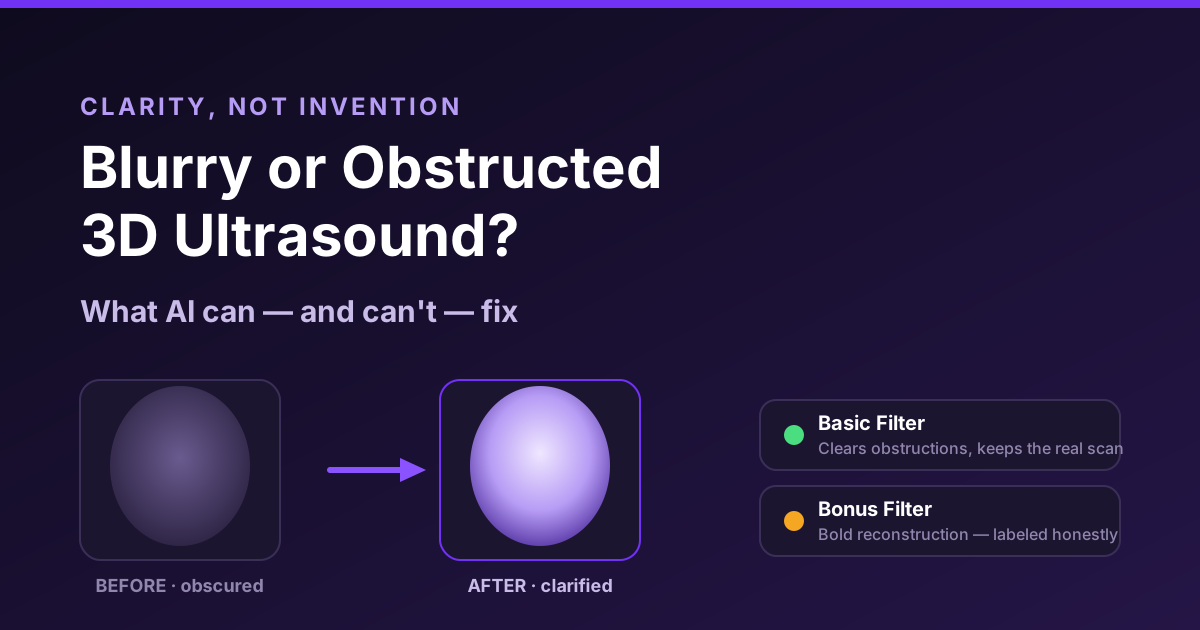
Blurry or Obstructed 3D Ultrasound? Here's What AI Can Actually Fix
TL;DR — A blurry or obstructed 3D/4D ultrasound is usually caused by fluid, fetal position, a hand or the cord over the face, an anterior placenta, or an older machine — none of it your fault. AI is genuinely good at removing obstructions and sharpening a real-but-murky face. Where the face is fully blocked, AI has to imagine the hidden part, and an honest tool will label that as a bold reconstruction rather than passing it off as the real baby. Preview the result free before you pay.
You waited weeks for your 3D/4D scan, and baby spent the whole appointment hiding behind a hand. Or the image came out soft and grainy. Before you write off the money, here's what AI enhancement can realistically recover — and, just as importantly, what it can't.
Why scans come out blurry or hidden
A less-than-perfect 3D scan almost never means the studio did something wrong. The usual culprits:
- Fluid levels between baby and the probe
- Fetal position — face-down, tucked into the placenta, or turned away
- A hand or the umbilical cord directly over the face
- An anterior placenta (one sitting on the front wall of the uterus), which softens every image
- An older ultrasound machine with lower 3D resolution
A re-scan isn't always possible or affordable — which is where AI enhancement comes in.
What AI can genuinely recover
Removing shadows and obstructions and sharpening a real-but-murky face is where AI is strongest. This is real, dependable work — the AI is cleaning up detail the ultrasound actually captured, not fabricating it.
CrystalReveal's Basic Filter does exactly this: it clears the image while preserving the real ultrasound, without inventing a face. If the face is there but soft, obstructed, or shadowed, this is usually enough to turn a "delete it" scan into a keepsake.
| The problem | Can AI fix it? | Which pass |
|---|---|---|
| Grainy / soft but visible face | Yes, reliably | Basic (clarity) |
| Shadow across the face | Yes, reliably | Basic (clarity) |
| Hand or cord partly over the face | Often | Basic (clarity) |
| Face fully hidden / turned away | Only as a guess | Bonus (reconstruction) |
Where AI is guessing (and how to stay honest)
When the face is fully blocked — turned into the placenta, or completely behind a hand — any tool has to imagine the hidden part. There's no data to recover, so it's prediction, not clarification.
CrystalReveal separates this into a Bonus Filter and labels it as a bold, hit-or-miss reconstruction — so you never confuse "cleaned up" with "made up." An honest tool tells you which one you're looking at. Be skeptical of any service that promises a guaranteed, perfectly accurate face from a scan where the face was never actually visible.
The difference in one line: Basic clarifies what the scan captured. Bonus imagines what it didn't. You should always know which you're getting.
How to get the best result
- Start from the clearest source you have. Use a 3D/4D image where the head and body are identifiable, even if it's soft. More real detail means less guessing.
- Use the free preview first. CrystalReveal gives a free watermarked preview so you can judge with your own scan before paying.
- Regenerate before you commit. You get up to 2 free regenerations per image; if you're still not happy, upload a different source image for 2 more.
- Ask your studio for the full gallery. The frame the sonographer picked isn't always the best one for enhancement. If your studio uses Bomee Core, the entire scan lands on your phone before you leave — so you can pick the best source frame yourself.
For a deeper look at why scans come out imperfect and what studios owe you, see What To Do If Your 3D Ultrasound Photos Came Out Blurry.
See it before you pay
You don't have to gamble. Upload your 3D/4D image, see a free watermarked preview, and decide from there. Try CrystalReveal — Basic clarity that keeps the real scan, or a bold Bonus reconstruction when the face was hidden.
AI enhancement is for keepsake and entertainment purposes, not medical diagnosis. Where a scan is obscured, results can differ from the real baby.