
How to Start a 3D/4D Ultrasound Studio: The Complete 2026 Guide
TL;DR — Starting a 3D/4D ultrasound studio in 2026 typically requires $45,000–$120,000 in startup capital, depending on whether you buy a new or refurbished ultrasound machine. You don't need a medical license in most U.S. states, but you do need a registered sonographer (RDMS), proper liability insurance, and a delivery/workflow platform that can handle modern client expectations. Plan on 90–120 days from lease signing to first paying client.
If you've been dreaming about turning that ultrasound experience into a business, you're not alone. The elective ultrasound market in North America has grown roughly 9% year-over-year since 2021, fueled by social-first parents who want shareable, frame-worthy keepsakes — not grainy clinical printouts. But "I love babies" is not a business plan. Here's how the studios that actually survive their second year get built.
Step 1: Validate the market in your zip code
Before you sign a lease, do this 30-minute exercise. Search Google Maps for "3D 4D ultrasound" + your city. Then do it for the three nearest cities within a 45-minute drive. You're looking for:
- Studio density — One competitor within 20 minutes is healthy. Four is saturated.
- Review velocity — A studio averaging 8+ new reviews per month is doing 200+ scans monthly. That's your demand floor.
- Price ceiling — Sort packages from low to high. The 75th-percentile price (not the average) is what you can charge with a strong brand.
If the math doesn't pencil out at the 75th-percentile price, don't open. Move zip codes or move on.
Step 2: Pick your equipment tier
This is where most first-time owners overspend. There are three honest paths:
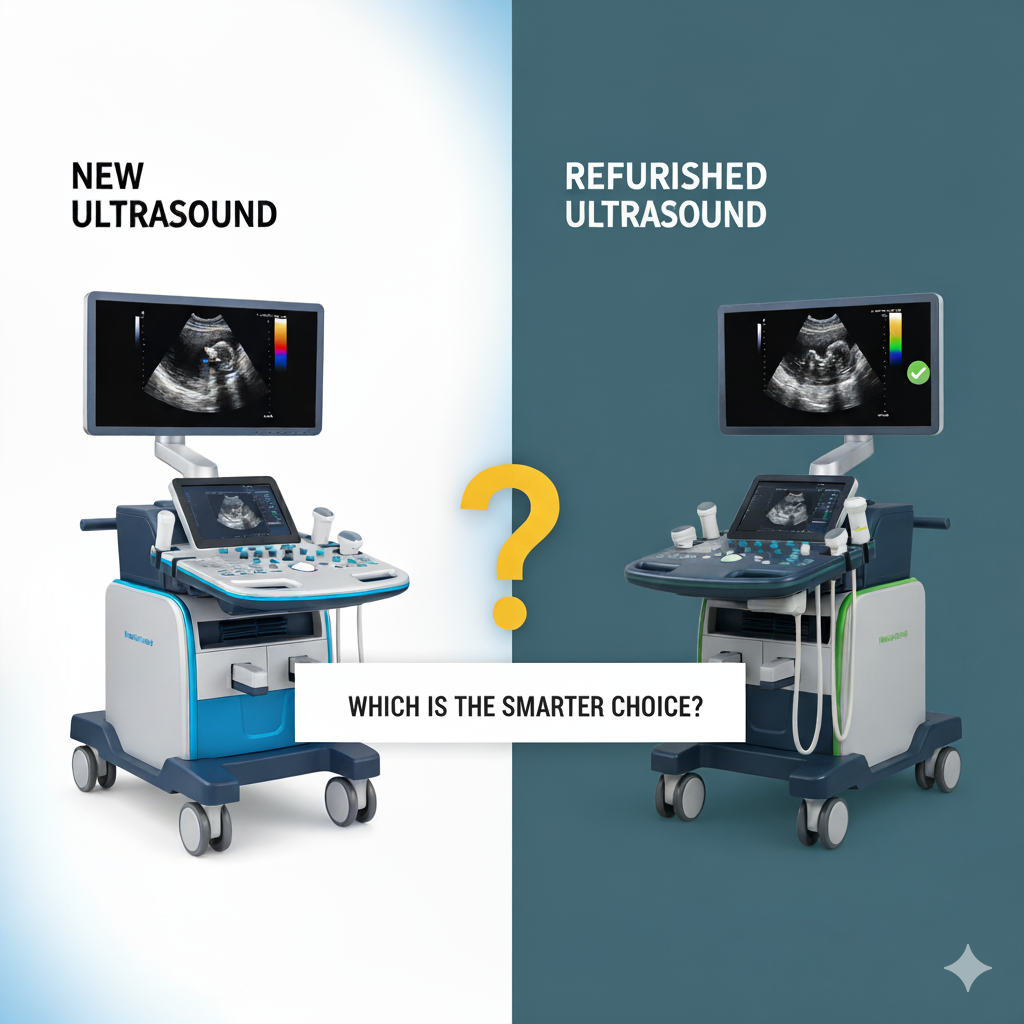
Path A — Refurbished mid-tier ($18,000–$32,000)
A refurbished GE Voluson E8 or Samsung WS80A from a certified reseller gives you 90% of the image quality of a brand-new machine at one-third the price. Look for machines under 6 years old with a fresh probe warranty.
Path B — New entry-tier ($55,000–$75,000)
A new Mindray DC-70 or GE Voluson Signature is the sweet spot for studios that want vendor support, a 5-year warranty, and the ability to finance through the manufacturer.
Path C — Premium flagship ($95,000–$160,000)
A new GE Voluson Expert 22 is the gold standard, but the ROI math only works if you're charging premium-tier package prices ($250+) in a metro market.
Rule of thumb: your machine should cost less than 9 months of your projected scan revenue. If a $90,000 machine requires 18 months of perfect bookings to pay off, you've over-bought.
Step 3: The licensing reality (it's lighter than you think)
In most U.S. states, elective ultrasound is legal as long as:
- The scan is performed by a credentialed sonographer (RDMS, RDCS, or equivalent).
- You don't make diagnostic claims, perform medical reads, or assess fetal health.
- You include a standard non-diagnostic disclaimer in your intake forms.
A few states (notably Connecticut and Oregon) have stricter elective ultrasound rules — verify with your state's department of public health before you sign a lease. The FDA has guidance discouraging non-medical fetal ultrasound, but it does not prohibit it.
You'll also need:
- General liability + professional liability insurance ($1,800–$3,200/year for a single-location studio)
- HIPAA-aligned data handling (more on this below)
- City business license + sales tax registration
Step 4: Location, build-out, and the room itself
Boutique ultrasound is an experience business. Clients are paying for a moment, not a procedure. The room matters more than the strip-mall sign.
- Square footage: 800–1,400 sq ft is plenty for a one-room studio
- The scan suite: soft lighting, dimmable, dark accent wall behind the monitor, a queen-size massage bed (not an exam table), seating for 4–6 family members
- Big-screen TV: A 65"+ wall-mounted monitor for the live feed is non-negotiable in 2026
- Build-out budget: $12,000–$28,000 if you're starting from a vanilla shell
Step 5: The workflow stack — where new owners leave money on the table
Here's the part that separates 3-year survivors from studios that close in year one. Your delivery workflow is now part of your product. Clients no longer accept a USB stick and a printed photo. They expect:
- Instant phone delivery of every clip
- Cloud storage they don't have to manage
- The option to upgrade to a hyper-realistic AI portrait while they're still in the room
This is where platforms like [Bomee Core](/bomee-core) earn their keep. Bomee Core is a palm-sized device that connects to 99.9% of ultrasound machines and pushes every scan directly to the client's phone in two clicks — no USBs, no Dropbox links, no follow-up tech support calls. Bundle that with [BabyView AI](/babyview-ai) for instant on-site AI portraits, and you've turned your studio's average ticket from $129 into $189+ without adding a single staff minute.
Read a [real-world studio profile](/customer-stories) to see how this stack plays out in practice.
Step 6: Pricing your packages
The studios that survive don't compete on price. They build a clear good-better-best ladder:
| Tier | Price | What's included |
|---|---|---|
| Gender Reveal | $59–$89 | 15-min scan, 5 photos, gender determination |
| Signature 3D/4D | $129–$179 | 30-min scan, full digital gallery, instant phone delivery |
| Premium AI Portrait | $189–$249 | Everything above + on-site AI portrait + heartbeat keepsake |
The premium tier should be your most-purchased tier. If clients aren't trading up, your middle tier is over-priced or your premium tier under-delivers.
Step 7: Year-one financial reality
A realistic first-year P&L for a single-location studio in a mid-size U.S. metro:
- Monthly revenue (months 1–6): $4,800–$9,200
- Monthly revenue (months 7–12): $11,000–$22,000
- Fixed overhead: $5,200–$7,800/month (rent, insurance, software, marketing)
- Break-even: typically month 7–9 if you book 60+ scans/month at an average ticket of $145
Most studios that fail in year one fail for the same reason: they over-invested in equipment and under-invested in marketing and workflow.
Ready to build a studio that actually survives?
Bomee partners with new and growing studios across North America to provide the workflow, delivery, and AI-portrait stack that turns first-time visitors into 5-star reviewers — with $0 setup cost and a partner-growth revenue model. [Talk to our partnerships team](/contact-us) to scope your launch in under 30 minutes.